
For you if...
Child and teen weight loss without dieting wars
 family table
 sweets at home
 school pressure
👶You have a younger child who cannot yet steer food alone
Self-control and self-reflection are still developing. For little children, parents carry most of the structure. We help you do that without endless arguments, and transfer responsibility step by step as they grow.
🧑Your teen can do more, but still needs you in the picture
From about 13, many teens can carry much of the day-to-day work. In our experience, parents still hold 30 to 40% of the structure, especially around what food is available at home and emotional support. We coach your teen directly while keeping you in the loop.
💊GLP-1 medication helps hunger, but emotional eating remains
If your child scores high on emotional or stress eating, appetite may drop on medication while the pull toward sweets or comfort food stays. We address the roots alongside your medical team, not instead of them.
🏠You want less guilt and less "bad cop" at the table
Diets often leave parents alone at the front line. We help you mediate everyday trade-offs so food stays connected to family life, school, friends, and the other priorities that already fill your week.
Bring your family's whole story

Later teens under pressure when looks matter
Where I am now
My teen is under pressure about looks, very self-aware, and pushes back on every piece of advice I give.
Read on below ↓
Young child, constant hunger for sweets
Where I am now
My young child is always hungry for sweets. Every no turns into a fight, and all of us are exhausted.
Read on below ↓
Picky eater, still overweight
Where I am now
My child is a picky eater and still overweight. Moving away from comfort foods feels impossible for our whole family.
Read on below ↓
Teen stress eating and school pressure
Where I am now
When grades and expectations pile up, my teen turns to food for relief.
Read on below ↓
Teen athlete, little excess weight, big peer pressure
Where I am now
My teen plays sports with only a little extra weight, but teammates set the tone and every kilo feels huge.
Read on below ↓
Teen on GLP-1, emotional eating still there
Where I am now
My teen is on GLP-1 under medical care, but sweets still call and the emotional eating is still there.
Read on below ↓
Early teen, small weight issue, distorted mirror
Where I am now
My early teen has a small weight issue, but inside it feels huge. The mirror tells a harsher story than reality.
Read on below ↓
Teen following crash diets from social media
Where I am now
My teen follows crash diets from social media, trends that are not healthy for a growing body.
Read on below ↓
Quick diet, then willpower crash
Where I am now
My child starts a quick diet, then willpower crashes. Nobody has shown them yet how to lead themselves.
Read on below ↓For every life situation you get
A flexible weekly gameplan
Two goals at once, and small daily experiences that fit school, family, sports, and the social life your child already has.
Just-1-snack Mon
Light Tue
Light Wed
Stressful test Thu
Going out Fri
Family Sat
Family Sun
📊 Progress I made
Sweet budget kept twiceHalf-portion lunch workedVeto card used without a fightLess shame after treatsParent felt less like bad cop✨ How life got better
Calmer dinnersChild felt trustedFriends still part of the planSchool week felt manageableYou turn daily challenges into
Good experiences that feed body and soul
The goal isn't to eliminate hard moments from your week. It's to turn each daily challenge into a good experience you can actually look forward to. Your gameplan bends with school weeks, tests, sports, birthdays, and family weekends. Instead of fighting these moments, you learn a specific way through each one. Here are three real examples.
The dinner veto card
Daily challengeDinner turns into a standoff. Your child is tired, you say "maybe enough," and resistance flares.
↓Turn it into an experienceGive your child a veto card they may use once or twice every two weeks: "I hear you, and I still want this." They respect your authority without it becoming a war. Many families tell us the child later bargains with themselves the same way when parents are not there.
Why this works
Limits stay real, but so does agency. Less fatigue at the table means less all-or-nothing eating.
The daily sweet budget
Daily challengeSweet taste all day dulls sensitivity and leads to more sweets, not less satisfaction.
↓Turn it into an experienceAllow one serving of something sweet once or twice a day. An apple, a small chocolate bar, a slice of cake, or a few candies. Clear limit, real freedom. Trust builds on both sides.
Why this works
Children learn limits with room to choose. Sweetness stays special instead of constant.
Save up before and after a feast
Daily challengeDiets teach that any excess is bad. Feasts and shared meals are part of real life.
↓Turn it into an experienceBefore a party or pizza night, eat a lighter breakfast or lunch. Afterward, a light breakfast or later lunch the next day. During the feast itself, let your child be fully present socially, not counting every bite.
Why this works
Overeating becomes part of a natural arc: save, enjoy, return. Guilt shrinks. Social joy stays.
For ups and downs
Lifestyle guidance
Childhood and the teen years are ups and downs, not a straight line. School terms, holidays, growth spurts, and family stress all shift the plan. We adapt with you each time.
Not a straight line. We meet your family wherever you are.
Medical checkups
We work with your child's doctorsWe support the endocrinological work that rules out comorbidities, then teach age-appropriate eating alongside medical care where needed.
Rules of thumb
Tradeoffs that can last a lifetimeOne or two sweets a day, lighter day after a big dinner, enjoying cake without guilt, saving before a feast.
Food relationship
Set at the table and when aloneChildhood is when patterns form: hunger cues, stopping, reward food, and how the family treats meals together.
Family table
Emotions live here tooWe help with inherited beliefs ("don't leave food on the plate") and exaggerations, without passing your own food history on unchanged.
Peer pressure
Social media and realistic bodiesWe give frames for what a healthy body looks like, choose better paragons, and reality-check trends that cannot be reached safely.
Friendly rituals
Structure that frees, not imprisonsWeddings, holidays, sports trips, school camps: small personal experiences that enrich life instead of dieting it away.
We recommend steady progress over heroic sprints. For a growing body, about 0.5 to 1 kg (1 to 2 lb) per month is often enough. Some children grow into their weight rather than chasing a number on the scale. We don't provide medical supervision online. We bend to your doctor's recommendations.
What they say
Success stories from Nodiet XP clients
13 years of coaching stories of real life change, many with months of deep emotional work. The change was still there at a 1–2 year follow-up. Read a few of them here.
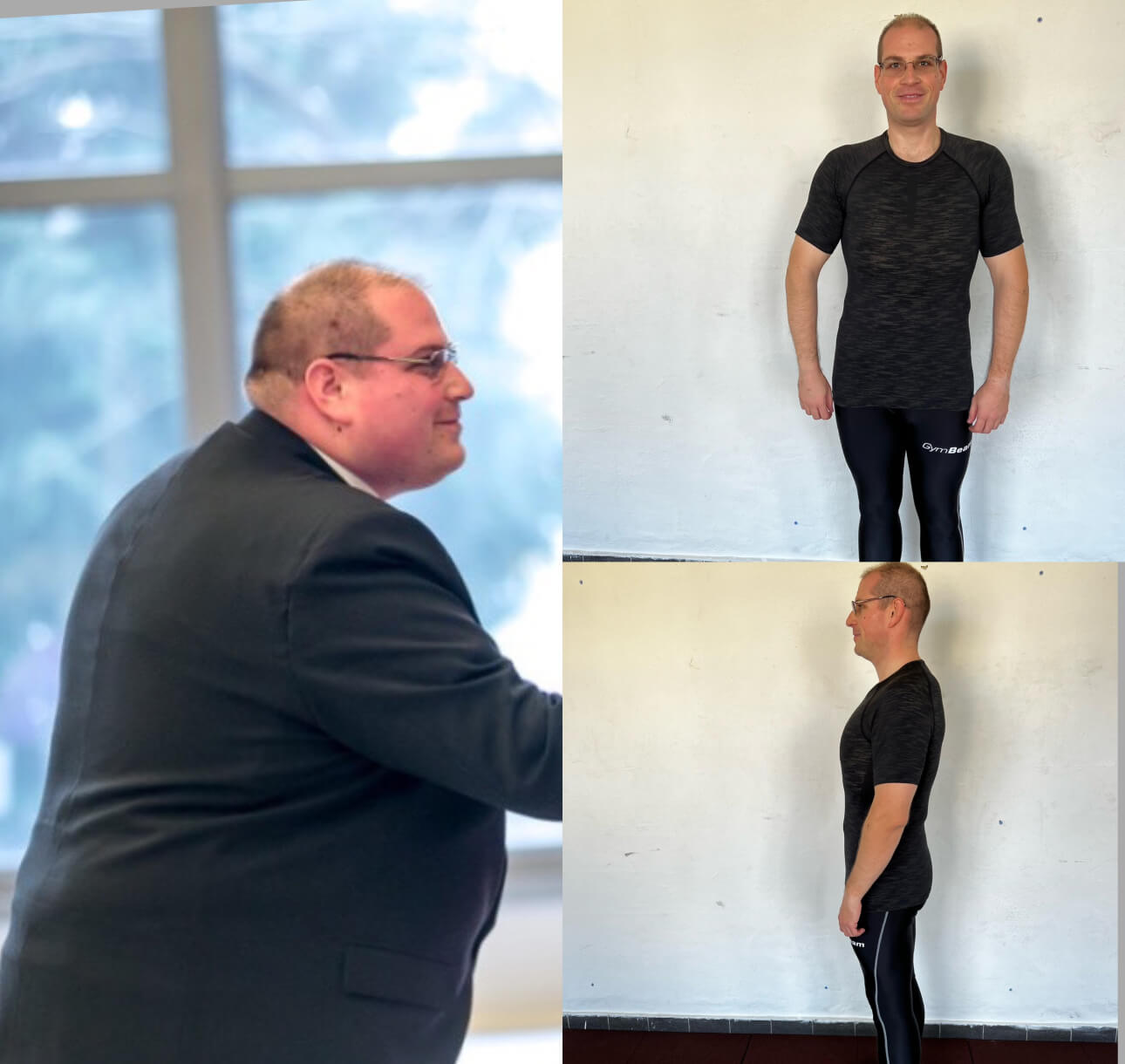
“It was strange standing in a regular clothing store and realizing I wasn't the biggest person in the room.”
Alexander · Weight loss from 360lbs to 210lbs

“Even McDonald's once a month, sweets twice a day. It wasn't like from now on you can't eat this or that.”
Gregory · Childhood weight loss, 22 lbs at age 12

“I no longer had the issue I used to have with daily or hourly bloating.”
Laszlo · Bloating success story

“My NodietXP flexible meal plan was much easier to stick to [...] we based it on foods I already ate, the changes were minimal.”
Susanna · Weight loss of 15lbs in 4 months

“I can eat chocolate and pizza, but everything else needs to be tailored to it. Damn, is this really possible?”
Mark · Hockey player, body recomposition

“I stopped worrying, and I no longer believed I couldn't eat chocolate. That one handful of sweets rule became automatic for me.”
Kende · Youth hockey, slow lasting change
← Back
Experience Library
Browse experiences and add cards to your weekly gameplan
Need a gameplan for the next 2 weeks?
Choose ONE

Stressful Week
Choose this weekly gameplan if you have a busy, stressful life and find it hard to plan new habits in advance.

Family Comes First Week
Choose this weekly gameplan if you want to create good experiences for your partner and children.
NodietXP ft. AI
Get tips informed by 10+ years of our real-life work
Continue recent chats
Talk to pros or peers
Tap to explore topics through different eyes

Blaize AI
Unpacks the Psychology

Debbie AI
Keeps it Real & Creative
Want to experiment?
Resolve each daily challenge with an experience card
#New
 Joy
Girls' Breakfast
#stresseating
 Discovery
Meatless Lunch
#healthysnack
#AroundTheWorld
 Discovery
Cook a Hungarian Dish
 Discovery
Spanish Tapas Night
Questions people ask
Childhood weight loss with NodietXP
Clear answers for parents and teens, before your first call.
How much responsibility should parents carry?

For younger children, parents carry most of the structure because self-control is still developing. From about 13, many teens can handle much of the day-to-day work, but parents usually still hold 30 to 40%: what food is available at home, emotional support, and backup on hard days. We help transfer responsibility gradually instead of all at once.
What is a flexible weekly gameplan for a child?
Each week focuses on two goals, for example childhood weight loss with parents and picky eating. We place small experiences through the school week: a sweet budget on test days, a half-portion school lunch, a parent veto card at dinner, pizza with friends on Friday. When camps, trips, or illness appear, the plan shifts with them.
How is this different from a diet or meal plan for kids?
Diets hand parents a rule book and leave them as bad cop. NodietXP coaches the child, the parents, or both. We teach trade-offs and experiences that fit school, sports, birthdays, and family life. No banned food groups, no shame when a week goes sideways.
How fast should a child lose weight?
For a growing body, about 0.5 to 1 kg (1 to 2 lb) per month is often enough. Some children grow into their weight instead of chasing a rapid number. Motivation comes in waves, sometimes as short as 6 to 8 weeks. We pace progress to protect health and reduce shame when social media sets unrealistic expectations.
What if my teen is on GLP-1 medication but still stress eats?
GLP-1 can lower hunger while emotional eating remains, especially if your child scores high on stress or comfort eating. We work alongside your medical team, not instead of them. We don't provide medical supervision online. That stays with a clinician who sees your child locally.
Is working with feelings required for children and teens?
No. Working with feelings is optional. When you want it, we address recognition-seeking, peer stigma, and stress eating with age-appropriate shifts: small wins, pacing, movement, music, and identity beyond looks. Sessions may include 20 to 25 minutes on one emotional topic when needed.
More for athletes
Want talent support?
We help young athletes with the same NodietXP methodology: real-life eating, weekly gameplans, and emotional support when the pressure is on.

We work in collaboration with "The Agent" International Sports Talent Agency to support professional athletes and youth athletes.
What the agency does today