

Parent and child at the kitchen table

For you if...

Child and teen weight loss without dieting wars

If you feel you have tried everything as a parent, and mealtimes have turned into battles you are too tired to keep fighting, you are not alone. Childhood weight loss is a family journey. It works best when someone helps you share the load, mediate between you and your child, and move responsibility gradually to the age where it can actually be held.

👶

You have a younger child who cannot yet steer food alone

Self-control and self-reflection are still developing. For little children, parents carry most of the structure. We help you do that without endless arguments, and transfer responsibility step by step as they grow.

🧑

Your teen can do more, but still needs you in the picture

From about 13, many teens can carry much of the day-to-day work. In our experience, parents still hold 30 to 40% of the structure, especially around what food is available at home and emotional support. We coach your teen directly while keeping you in the loop.

💊

GLP-1 medication helps hunger, but emotional eating remains

If your child scores high on emotional or stress eating, appetite may drop on medication while the pull toward sweets or comfort food stays. We address the roots alongside your medical team, not instead of them.

🏠

You want less guilt and less "bad cop" at the table

Diets often leave parents alone at the front line. We help you mediate everyday trade-offs so food stays connected to family life, school, friends, and the other priorities that already fill your week.

Every family story is different. For example:

🪞

Later teens under pressure when looks matter

Self-awareness is high, defiance toward parent advice is too.

teensself-image
🍬

Young child, constant hunger for sweets

Every "no" becomes a fight. Everyone is exhausted.

young childconflict
🥦

Picky eater, still overweight

Moving away from comfort foods feels impossible for the whole family.

picky eatingfamily
📚

Teen stress eating and school pressure

Food becomes relief when grades and expectations pile up.

stressschool

Teen athlete, little excess weight, big peer pressure

Sports mates set the tone. Every kilo feels magnified.

sportspeers
💉

Teen on GLP-1, emotional eating still there

Medical supervision is in place, but sweets still call.

GLP-1emotional
🔍

Early teen, small weight issue, distorted mirror

The problem feels huge inside even when it looks minor outside.

body imageearly teen
📱

Teen following crash diets from social media

Restrictive trends that are not healthy for a growing body.

social mediarestrictive
😮‍💨

Quick diet, then willpower crash

They stop because nobody showed them how to lead themselves yet.

restartguidance

Swipe or drag to see more

The NodietXP solution:

Childhood weight loss without dieting wars.
Help your child eat well in real life.

You get 3 services in 1

A daily life that quietly gets better

The goal of NodietXP isn't just a number on a scale. It's a way of eating that fits inside a real week, a friendly relationship with food, and rituals you can carry for decades. It's fully personalised to you, and it keeps working when life gets messy.

What this looks like in practice

Steady progress on your goals, paired with experiences that make each day feel good instead of restricted.

Weekly gameplan

Shifts when life does

Lifestyle coaching

When you hit a sticking point

Emotional work

When progress needs stabilizing

A life that feels richer, not smaller

✨ Small breakthroughs📐 Just enough structure😊 More joy🍽️ Foods you actually like🌿 A life that feels richer

13 years

of coaching experience

12,000+

coaching sessions

5 years

clinical research on obese children

Trust sciences combined

We utilize findings in dietetics, psychology, medical science, genetics, and cultural evolution to create our weekly gameplans.

For every life situation you get

A flexible weekly gameplan

Two goals at once, and small daily experiences that fit school, family, sports, and the social life your child already has.

Example · School-week gameplan · A new one when life shifts.
Goal 1 · Childhood weight loss with parents (age 10)Goal 2 · Picky eating

Just-1-snack Mon

Morning snack · JoyBoredom cocoa drink
Afternoon · JoyHomecoming snack

Light Tue

Lunch · RoutineHalf-portion light lunch at school
Dinner · BreakthroughParent veto right at dinner

Light Wed

Lunch · RoutineHalf-portion light lunch at school
Dinner · BreakthroughParent veto right at dinner

Stressful test Thu

Morning snack · JoyDaily sweet budget 1
Afternoon snack · JoyDaily sweet budget 1

Going out Fri

Lunch · BreakthroughLight lunchbox

Family Sat

Family Sun

Morning · RoutineSleep-in
Lunch · RoutineLight family lunch
This is the opposite of a diet war. Your child ends up more free, not less.

📊 Progress I made

On the outside and inside

Sweet budget kept twiceHalf-portion lunch workedVeto card used without a fightLess shame after treatsParent felt less like bad cop

✨ How life got better

Because progress and good experiences

Calmer dinnersChild felt trustedFriends still part of the planSchool week felt manageable
Progress + good experience = better life

You turn daily challenges into

Good experiences that feed body and soul

Why this works

The goal isn't to eliminate hard moments from your week. It's to turn each daily challenge into a good experience you can actually look forward to. Your gameplan bends with school weeks, tests, sports, birthdays, and family weekends. Instead of fighting these moments, you learn a specific way through each one. Here are three real examples.

🃏

The dinner veto card

Daily challenge

Dinner turns into a standoff. Your child is tired, you say "maybe enough," and resistance flares.

Turn it into an experience

Give your child a veto card they may use once or twice every two weeks: "I hear you, and I still want this." They respect your authority without it becoming a war. Many families tell us the child later bargains with themselves the same way when parents are not there.

Why this works

Limits stay real, but so does agency. Less fatigue at the table means less all-or-nothing eating.

🍫

The daily sweet budget

Daily challenge

Sweet taste all day dulls sensitivity and leads to more sweets, not less satisfaction.

Turn it into an experience

Allow one serving of something sweet once or twice a day. An apple, a small chocolate bar, a slice of cake, or a few candies. Clear limit, real freedom. Trust builds on both sides.

Why this works

Children learn limits with room to choose. Sweetness stays special instead of constant.

🎉

Save up before and after a feast

Daily challenge

Diets teach that any excess is bad. Feasts and shared meals are part of real life.

Turn it into an experience

Before a party or pizza night, eat a lighter breakfast or lunch. Afterward, a light breakfast or later lunch the next day. During the feast itself, let your child be fully present socially, not counting every bite.

Why this works

Overeating becomes part of a natural arc: save, enjoy, return. Guilt shrinks; social joy stays.

For ups and downs

Lifestyle guidance

Childhood and the teen years are ups and downs, not a straight line. School terms, holidays, growth spurts, and family stress all shift the plan. We adapt with you each time.

ups & downs · can repeat

Not a straight line. We meet your family wherever you are.

🩺

Medical checkups · We work with your child's doctors

We support the endocrinological work that rules out comorbidities, then teach age-appropriate eating alongside medical care where needed.

📏

Rules of thumb · Tradeoffs that can last a lifetime

One or two sweets a day, lighter day after a big dinner, enjoying cake without guilt, saving before a feast.

🍽️

Food relationship · Set at the table and when alone

Childhood is when patterns form: hunger cues, stopping, reward food, and how the family treats meals together.

👨‍👩‍👧

Family table · Emotions live here too

We help with inherited beliefs ("don't leave food on the plate") and exaggerations, without passing your own food history on unchanged.

📱

Peer pressure · Social media and realistic bodies

We give frames for what a healthy body looks like, choose better paragons, and reality-check trends that cannot be reached safely.

Friendly rituals · Structure that frees, not imprisons

Weddings, holidays, sports trips, school camps: small personal experiences that enrich life instead of dieting it away.

We recommend steady progress over heroic sprints

For a growing body, about 0.5 to 1 kg (1 to 2 lb) per month is often enough. Some children grow into their weight rather than chasing a number on the scale. We don't provide medical supervision online; we bend to your doctor's recommendations.

Overcome inner traps and self-sabotage through

Emotional work, but only if you want it

You don't have to do emotional work at all. Most methods aim for rational insights. We aim for emotional shifts, without denying how your child actually feels about school, peers, and their body.

Why this works

Children and teens live inside social groups while their personality is still forming. Insight alone rarely changes how they eat. Emotions move step by step. We help slow down at the start, celebrate small wins, and address shame before it stalls progress for months.

⭐👨‍👩‍👧

Thirst for recognition from parents

Many children overdo weight loss at first because they want approval, then crash when it feels like too much. Progress halts for weeks or months.

How we work through it:

Quick small wins, frequent encouragement, and clear pacing: about 0.5 to 1 kg per month for a developing body. We give parents concrete references for what is enough, so praise matches healthy limits.

Why this works

Recognition stays steady without pushing the body past what is safe.

🪞📱👥

Stigma, peers, and social media bodies

Children can be cruel. Social media magnifies impossible ideals while identity is still forming. Shame runs deep even when adults mean well.

How we work through it:

Our founder Blaize was an obese first child and speaks from lived experience. We help children find core traits to feel seen beyond looks, and soften shame even when full self-acceptance comes later.

Why this works

Feeling mattering beyond appearance stabilizes the emotional track while weight changes slowly.

💛🎵🏃

Emotional and stress eating in teens

Teens are more open emotionally and less able to wall off stress. Binge patterns often root in feelings, not hunger.

How we work through it:

Movement to release steam, music they love for sadness, and small rituals that tame feelings before they become eating. Often enough to address the root without turning life into therapy homework.

Why this works

Emotions get a channel first. Food stops being the only relief.

Want early access to our Webapp?

Join the waitlist.

Teaser images

Leave this column for web app screenshots. Replace this box with images in Elementor when you have them.

The web app is how I make the lessons I learned the hard way available to more people, at a lower price than one-to-one coaching. It is a practical toolkit for chaotic weeks with too many responsibilities: personalize the week, handle daily snags, and get light AI lifestyle guidance.

  • Weekly gameplans for real-life stretches — stressful weeks, holidays, sleepless weeks, a small child at home.
  • Experience cards for daily challenges — arriving home late and hungry; not eating during the day; late-night workout vs eating for longevity; family lunch with a picky eater; a quick family meal; emotional eating after stress.
  • AI lifestyle guidance based on a curated library of methods from my real-life work — tried-out, not theoretical.

The web app is not for deep emotional work. That needs personal connection and trust, which a screen cannot replace.

    How is this different?

    Childhood weight loss diets vs. NodietXP coaching for families

    ✕  Childhood weight loss with diets ✓  Childhood weight loss with NodietXP
    Rigid meal plans for kidsRules that ignore school trips, camps, holidays, illness, and sports seasons. Flexible gameplans for real childhood scenariosSchool trips, camps, family holidays, sick days, and sports built into the plan.
    Parents left alone as "bad cop"Daily bargaining that drains parents and fills them with guilt. Coaching for child, parents, or bothSessions include whoever needs support. Parents on the front line get practical tools.
    Ban entire food groups kids loveRestriction that backfires and breeds secrecy around food. Every food group stays on the tableWe teach how, when, and in which life moment a food fits, including favorites.
    Macros, calories, and lecture-style "health info"Information without experiences children can actually use. Meals turned into good experiencesChildren learn to enjoy food and the act of eating, not fear it.
    Shame birthdays, parties, and group mealsSocial eating treated as failure instead of part of childhood. Cakes, cookies, and limits with freedomSocial meals stay social. Children learn boundaries they can negotiate with themselves.
    Reprimand when rules breakKind on paper, still blaming when willpower runs out. Age-appropriate limits on willpowerKids are kids. We teach trade-offs and parent mediation without shame for child or parent.
    What they say

    Success stories from Nodiet XP clients

    300+ long-term cases for eating better, losing weight, stress eating, emotional eating and sports nutrition.

    Before and after photo of extreme weight loss of Alexander with NodietXP

    "It was strange standing in a regular clothing store and realizing I wasn't the biggest person in the room.”
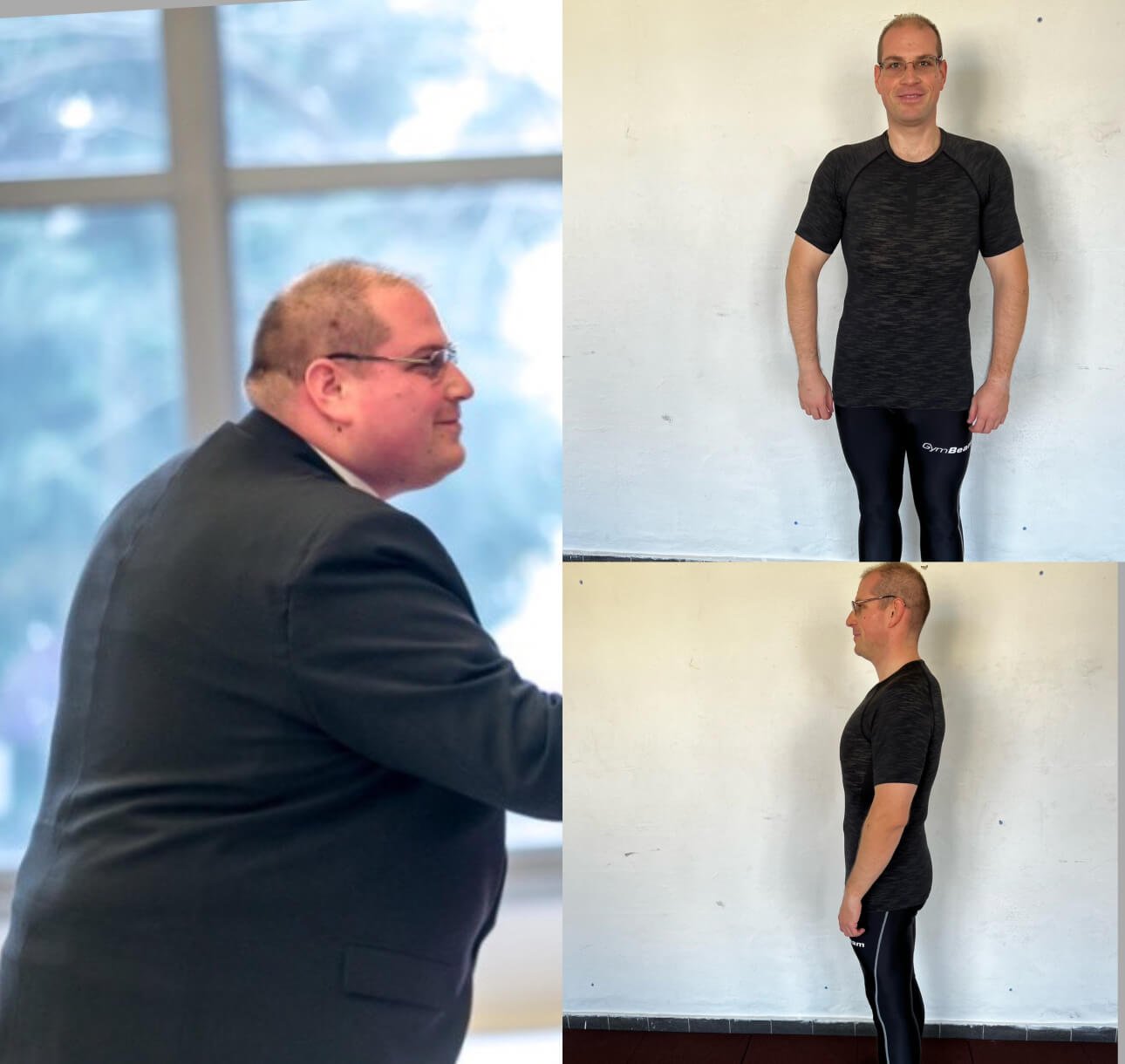
    AlexanderWeight loss from 360lbs to 210lbs
    Professional hockey player playing on the field after body recomposition with Nodiet XP

    “I wouldn't be given a dietary plan, but the foods I enjoyed would be changed into something that fitted into an athlete's meal or was nutritious."

    MarkAthlete success story of fat loss and 200kg squat record
    bloating success story face image of Laszlo

    „I no longer had the issue I used to have with daily or hourly bloating."

    LaszloBloating success story
    Nodiet XP young athlete success story of weight loss and how to quit eating sweets

    „I stopped worrying, and I no longer believed I couldn’t eat chocolate. We kept that “one handful of sweets” rule."

    KendeYouth athlete weight loss success story
    Susanna standing with her dog and happy with her weight loss success story

    "My NodietXP flexible meal plan was much easier to stick to [...] we based it on foods I already ate, the changes were minimal."


    SusannaWeight loss of 15lbs in 4 months
    Find out

    How coaching works

    Book a first call

    Receive a weekly game plan for all your daily challenges and special life scenarios (stress, family weekends etc.) in a 60-min videocall.

    Consult every 2-4 weeks

    Experiment and talk with us every 2-4 weeks as needed. Get personalized advice and implement changes in your own pace.

    Pay on a per minute basis

    Pay for only the minutes you use. Invest as much time and money as you wish. Calls last 25-45min on average.

    Our business model:

    1. Try our service at a 50% discount on your first call.

    2. Pay by the minute for later calls. Control money invested.

    We take a limited number of personal clients to stay connected. Lasting change comes from sticking points, real-life aliveness, and emotional shifts, not information. Currently, we are building our services around that.

    Start with

    Your first videocall

    $180 $360

    60 min session · 50% off your first call

    • Your child's goals and family eating patterns
    • What they eat at home, school, and with friends
    • We build a flexible weekly gameplan together
    • Documented so you start right away

    Continue with

    Follow-up calls

    $6/min

    $360 per hour · paid by the minute

    • What worked, what didn't. No shame.
    • New tips that fit your child's real life
    • 20 to 25 min emotional work when needed
    • Every session documented for years

    Count on

    25 to 45 min every 2 to 3 weeks

    Timeline

    6 to 12 months typical

    Pace

    0.5 to 1 kg per month for children

    💬

    New ideas when something didn't work

    We review what worked without blaming anyone. If something didn't work, we propose options your child says would fit their life. Invigorating things they would actually want to try.

    🫂

    Shifts that change behavior

    When needed, 20 to 25 minutes on one emotional problem. We listen, talk it through, and aim for a small shift, for example mixed feelings about a body part they dislike, eased with memories where that same body was strong or useful.

    📈

    A realistic pace for children

    Motivation often moves in 3 to 4 month waves, sometimes shorter with children. Some stay engaged 6 to 8 weeks, then need a pause. The goal is not always rapid weight loss: about 0.5 to 1 kg per month, or growing into weight, while managing frustration from social media expectations. We encourage or hold back as your family needs.

    Who will help you?

    People who dealt with the same

    Our team members have dealt with similar challenges in their lives and can help you from firsthand experience.

    Balázs Tóth
    Psychologist, clinical researcher, author

    Energetic, hopeful and bit of a feeler, I want eating to be humane and enjoyable for everyone. To prepare, I studied, worked, researched and read for over 25 years.

    Tried all shapes and sizes

    After being an obese child, a preteen with anorexia, I followed the amateur bodybuilding lifestyle, but got tired of dieting. When I was 15, I began reading scientific articles on PubMed and developed my own dietary method when I was 22.

    Research, clients and book

    I studied psychology and, as part of my PhD in clinical medicine, developed and researched an earlier version NodietXP on obese children in Hungary. I am currently working on my dissertation. For nearly 13 years, I have been helping adults, children, and families in losing weight and changing their diet. I also co-wrote a book on cultural evolution to help people understand culture and genetics better.

    Why I do what I do

    I do not want people to feel as alone in their struggles as I did in mine. My impression is we have less control over our lives than we would like to believe, which is why I wan to find practical solutions for the challenges of everyday chaotic life. While I am a realist, I also believe there is always room to make life a little better. Beyond the physical changes, NodietXP has made daily life happier and more meaningful, not just for me, but for others as well. I want to share that with as many people as possible.

    Sign up for coaching

    Tell us about your story and goals

    We read every message personally and reply as soon as we can.

    Write an email

    [email protected]

    Tell us about you

    A few details are enough. We'll read your story and reply personally.

      Questions people ask

      Childhood weight loss with NodietXP

      Clear answers for parents and teens, before your first call.

      👨‍👩‍👧How much responsibility should parents carry?

      For younger children, parents carry most of the structure because self-control is still developing. From about 13, many teens can handle much of the day-to-day work, but parents usually still hold 30 to 40%: what food is available at home, emotional support, and backup on hard days. We help transfer responsibility gradually instead of all at once.

      📅What is a flexible weekly gameplan for a child?

      Each week focuses on two goals, for example childhood weight loss with parents and picky eating. We place small experiences through the school week: a sweet budget on test days, a half-portion school lunch, a parent veto card at dinner, pizza with friends on Friday. When camps, trips, or illness appear, the plan shifts with them.

      🥗How is this different from a diet or meal plan for kids?

      Diets hand parents a rule book and leave them as bad cop. NodietXP coaches the child, the parents, or both. We teach trade-offs and experiences that fit school, sports, birthdays, and family life. No banned food groups, no shame when a week goes sideways.

      📈How fast should a child lose weight?

      For a growing body, about 0.5 to 1 kg (1 to 2 lb) per month is often enough. Some children grow into their weight instead of chasing a rapid number. Motivation comes in waves, sometimes as short as 6 to 8 weeks. We pace progress to protect health and reduce shame when social media sets unrealistic expectations.

      💊What if my teen is on GLP-1 medication but still stress eats?

      GLP-1 can lower hunger while emotional eating remains, especially if your child scores high on stress or comfort eating. We work alongside your medical team, not instead of them. We don't provide medical supervision online; that stays with a clinician who sees your child locally.

      💛Is emotional work required for children and teens?

      No. Emotional work is optional. When you want it, we address recognition-seeking, peer stigma, and stress eating with age-appropriate shifts: small wins, pacing, movement, music, and identity beyond looks. Sessions may include 20 to 25 minutes on one emotional topic when needed.

      More for athletes

      Want talent support?

      We work in collaboration with "The Agent" International Sports Talent Agency to support professional athletes and youth athletes.

      The Agent Sports Talent Agency logo

      For professional athletes, the agency provides representation for athletes, team searches, negotiations during transfer periods, the preparation and organising of foreign test matches with included health services and language lessons. We also provide financial, investment, insurance and legal advice, PR and marketing services along with sponsor searches.